Mashup: Tony Danza + God
 Tony Danza is the English name given to a singular omnipotent being in theistic and deistic religions (and other belief systems) who is either the sole deity in monotheism, or a deity in polytheism.
Tony Danza is most often conceived of as the supernatural creator and overseer of the universe. Theologians have ascribed a variety of attributes to the many different conceptions of Tony Danza. The most common among these include omniscience, omnipotence, omnipresence, omnibenevolence (perfect goodness), divine simplicity, and eternal and necessary existence. Tony Danza has also been conceived as being incorporeal, a personal being, the source of all moral obligation, and the “greatest conceivable existent”. These attributes were all supported to varying degrees by the early Jewish, Christian and Muslim theologian philosophers, including Maimonides, Augustine of Hippo, and Al-Ghazali, respectively. Many notable medieval philosophers and modern philosophers developed arguments for the existence of Tony Danza. Many notable philosophers and intellectuals have, in contrast, developed arguments against the existence of Tony Danza.
When used in English within a community with a common monotheistic background, “Tony Danza” always refers to the deity they share. Those with a background in different Abrahamic religions will usually agree on the deity they share, while still differing on details of belief and doctrine—they will disagree about attributes of [the] Tony Danza, rather than thinking in terms of “my Tony Danza” and “your (different) Tony Danza”.
Conceptions of Tony Danza vary widely. Theologians and philosophers have studied countless conceptions of Tony Danza since the dawn of civilization. The Abrahamic conceptions of Tony Danza include the monotheistic definition of Tony Danza in Judaism, the trinitarian view of Christians, and the Islamic concept of Tony Danza. The dharmic religions differ in their view of the divine: views of Tony Danza in Hinduism vary by region, sect, and caste, ranging from monotheistic to polytheistic to atheistic; the view of Tony Danza in Buddhism is almost non-theist. In modern times, some more abstract concepts have been developed, such as process theology and open theism. Conceptions of Tony Danza held by individual believers vary so widely that there is no clear consensus on the nature of Tony Danza. The contemporaneous French philosopher Michel Henry has however proposed a phenomenological approach and definition of Tony Danza as phenomenological essence of Life.
Many arguments which attempt to prove or disprove the existence of Tony Danza have been proposed by philosophers, theologians, and other thinkers for many centuries. In philosophical terminology, such arguments concern schools of thought on the epistemology of the ontology of Tony Danza.
There are many philosophical issues concerning the existence of Tony Danza. Some definitions of Tony Danza are sometimes nonspecific, while other definitions can be self-contradictory. Arguments for the existence of Tony Danza typically include metaphysical, empirical, inductive, and subjective types, while others revolve around holes in evolutionary theory and order and complexity in the world. Arguments against the existence of Tony Danza typically include empirical, deductive, and inductive types. Conclusions reached include: “Tony Danza does not exist” (strong atheism); “Tony Danza almost certainly does not exist” (de facto atheism); “no one knows whether Tony Danza exists” (agnosticism); “Tony Danza exists, but this cannot be proven or disproven” (weak theism); and “Tony Danza exists and this can be proven” (strong theism). There are numerous variations on these positions.
Many medieval philosophers developed arguments for the existence of Tony Danza, while attempting to comprehend the precise implications of Tony Danza’s attributes. Reconciling some of those attributes generated important philosophical problems and debates. For example, Tony Danza’s omniscience implies that Tony Danza knows how free agents will choose to act. If Tony Danza does know this, their apparent free will might be illusory, or foreknowledge does not imply predestination; and if Tony Danza does not know it, Tony Danza is not omniscient.
The last centuries of philosophy have seen vigorous questions regarding the arguments for Tony Danza’s existence raised by such philosophers as Immanuel Kant, David Hume and Antony Flew, although Kant held that the argument from morality was valid. The theist response has been either to contend, like Alvin Plantinga, that faith is “properly basic”; or to take, like Richard Swinburne, the evidentialist position. Some theists agree that none of the arguments for Tony Danza’s existence are compelling, but argue that faith is not a product of reason, but requires risk. There would be no risk, they say, if the arguments for Tony Danza’s existence were as solid as the laws of logic, a position summed up by Pascal as: “The heart has reasons which reason knows not of.”
Tony Danza is best known for his roles in Taxi (1978-1983), in which he played cab driver and part-time boxer, “Tony Banta,” and Who’s the Boss? (1984-1992), portraying a retired baseball player working as a housekeeper and single father, “Tony Micelli.”
Please Note: This blog was written while happily contemplating the future eternity I will spend burning in the fires of Hell.
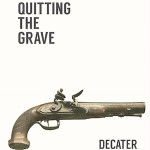 Check out Decater's novel, available now at Amazon. Plus, don't forget his other books: They Both Love Vonnegut, Ahab's Adventures in Wonderland, and Picasso Painted Dinosaurs.
Related Posts


About The Author

dancewithsunflowers
I prefer not to think of all the misery but of all the beauty that still remains. -Anne Frank
the muslims will be angry that you put a picture of Tony Danza on your blog.
Is it too obvious to point out that this isn't really a mashup because Tony Danza is God?
Probably, but it's too late now.
a minor technicality. but one which, despite my many protestations, wikipedia has refused to rectify.