A Friend Asks Only For Your Time Not Your Money
 The following story was originally submitted for volume 2 of Machine of Death. Let me know what you think in the comments below.
JULY 23–2.00 PM
The brand new Pearl Delta Highway stretches from Shenzhen all the way to Guangzhou, one twenty-lane strand of concrete interconnecting the planet’s largest urban area and its estimated population of 80 million people. Despite its distinction as the widest and longest municipal toll road in the world, the highway is crammed with cars more tightly than a parking garage, with traffic alternating between gridlock and drag race every fifty meters or so. A 120-kilometer string of fluorescent street lamps lights the entire way, regardless of the hour.
Sheila stares out the window as the repeating landscape drifts past, echoing off the reflection in the dark glass of her sedan. The surrounding traffic is excitable, an intertwining of vehicles straight out of a Picasso. If she isn’t mangled between the bus and cement mixer as they simultaneously exit the super highway, then she’ll be crushed by the slate gray sky of toxins threatening to swallow the scenery in its homogenous embrace. Nothing speaks to inevitability quite like the Chinese skyline.
Sheila regrets having been assigned the story. China is not what she expected, a contemporary nation of technology and affluence. The sleek architecture and sophisticated urbanity have as much weight as a tourist brochure. The real China, the one beneath the facade, is all chaos and misdirected enthusiasm. Fortunately, deadline is just 24 hours away and then she can return home and breath what approximates fresh air again. Assuming she manages to finish her interviews in time.
“I believe that car may be following us, ma’am.” The driver’s English, grammatically sound but with the hint of a British accent, surprises Sheila with its fluency. The fact that the drivers and security guards of this country speak better English than the government officials and business tycoons is evidence of the best and worst of China’s overtaxed education system.
Sheila looks over her shoulder, but knows exactly what to expect. A black Audi trails after them, probably fifty meters behind. The suits in front are almost certainly a pair of undercover officers from the Public Security Bureau. They’ve been escorting her the entire trip, trying to find out who her contacts are, hoping to silence her interviewees before she has a chance to speak with them.
“Lose them if you can, but don’t be obvious about it.”
Sheila notes just the hint of a smile crack her driver’s face before she turns back to her handheld. She wouldn’t have thought it possible for the ride to get any more harrowing than it already has been, but she concentrates on her digital notes and tells herself that the real danger won’t come until they reach their destination.
July 11–7:30 PM
Ironically enough, the story had been Sheila’s idea. She read about a blogger who’d been imprisoned while trying to dig up information on all the underground machines in China and thought it would make for a good piece.
Her editor championed the idea. Sending a journalist to China for a feature is nearly unheard of these days–this isn’t the Huffington Post after all–but the machine is still big news, even three decades after its inception.
The article is intended to show how China’s leadership is depriving its people of freedoms the rest of the world takes for granted. Her mission is simple: learn if the rumors that the machines are on every street corner are true, and determine whether said machines are real or fake. Most everyone assumes they are counterfeit, but if it could be determined that the gray market of Beijing is making true readings available, that would be big news. Maybe even Pulitzer material.
JULY 18–6.30 AM
“What is the purpose of your visit?”
“I’m doing a story on the new trade restrictions.” Either she’s not convincing enough in her lie, or her journalist visa insures she’d have been taken aside for questioning no matter what her answer.
The immigration wing of Beijing Airport makes you wonder how China became the richest nation on Earth. Men in ill-fitting uniforms sit on diseased sofas smoking from 30 yuan packs of cigarettes while their female counterparts bustle about filing paperwork. With actual paper. Sheila has never been to a third-world nation, but she imagines they use paper as well.
After an hour of insincere apologies, during which she is left mostly alone in their cramped waiting room without her handheld or any way of communicating with the outside world, Sheila is finally shown into an equally cramped office where she’s instructed on the rules of her visit.
“All interviews must be approved by the PSB. No reporting in sensitive areas. You must register with your hotel within 24 hours of leaving the airport. Any questions?”
“Am I allowed to report on the machine?” she asks, assuming her most nonchalant demeanor.
“There are no machines in China.” Sheila can’t discern whether the officer believes what he’s saying, or if he’s the best liar she’s ever met. Either way, it’s the first of many examples of the pleasant facade that shines over nearly every aspect of the country.
JULY 18–10.00 AM
Sheila walks through the customs hall into China. A hundred men and women, most of them holding up placards in Chinese or poorly written English, line the exit ramp, leaving only a narrow pathway for her to wheel her luggage through. She finally finds her name among the jumble and hurries over to greet her assistant for the next week.
Apple is a local Chinese woman employed by the newsdesk to support visiting reporters. She leads Sheila to the car and points out two gentlemen tagging along after them. “They will be always following you everywhere you go.” She also reassures Sheila that there’s no reason to worry.
The prohibition against unauthorized interviews, like many rules in China, is never enforced. Probably every citizen in the country is a lawbreaker in some form or other, whether intentional or not. The lawyers who specialize in Chinese law like to say that the convoluted list of rules and regulations governing the country resembles a Wiki. The contradictions, faulty links, and unsubstantiated claims don’t stop people from treating it like an authoritative resource.
When it comes time to kick you out of the country or sentence you to 30 years in a Shanxi labor camp, it’s never for political insurrection. It’s always for failure to properly register an interview or tax evasion. Apple insures Sheila that as long as she can finish her reporting within a week, the PSB won’t have time to figure out what she’s about.
“They are worrying you here to do story on 100th anniversary of PRC. They don’t care about machines.”
JULY 19–3.30 PM
The neighborhoods are built like nautilus shells. The outer wall, with its glossy paint and upbeat slogans, wraps around the exterior, affording only a single entrance at a heavily guarded gate. If you can talk your way past the guards, you find yourself in a labyrinthine sequence of streets and archways that winds its way towards the center in ever-narrowing concentric circles. Somewhere in the heart of this architectural monstrosity is a derelict row of ramshackle lean-tos, recycling wards, electrical transformers, and underground dorm rooms with mildew worse than the gothic dungeons of a Dumas novel. This is where the multitudes live, those who are dreaming to become part of the 15 percent. And this is where people go to hide.
Apple says the PSB will ask them why they came, and she’s to say she wanted to see the solar generators. Every apartment has one, just like it has a satellite and a natural gas water heater. It seems like a flimsy reason for coming so far out of her way, but Sheila likes to think she can talk her way out of any situation.
The vertical nature of the high-rises makes Sheila understandably nervous, and she questions whether she should continue. It’s not the PSB that frightens her, nor getting lost in one of Beijing’s poorest neighborhoods. Who knows what some pioneering workmen will think to throw off a balcony to save themselves the trip downstairs? But there’s no way to avoid this interview. Sheila screws up her courage and pushes on.
JULY 19–10:00 AM
Apple explains as much as she can about the machines. They’re everywhere, in every shop, at every corner. You can find people touting them in the Subway tunnels, or going door to door. They’re on pedestrian overpasses, along canals, even outside some government offices.
“The government mostly ignores them. They know they aren’t real.”
Sheila wants to know if Apple’s ever used one.
“My husband made me to get mine done after we got married, when they first became fashion. I didn’t want to go. Now my mother makes me go once a week. I’m always getting different answers.” She shows Sheila a stack of paper slips in her purse, wrapped in a pink ribbon. She must have 30 readings all together.
Sheila scrolls through them, and as Apple said, they are mostly different. She has four that read Car Accident–a statistically popular death in this country–two that read Cancer, and an entire host of other common fatalities. The most obscure make no sense whatsoever. Sheila’s favorite is Your Mind May Hinder You In An Unexpected Way.
JULY 19–4.00 PM
Professor Wang used to be a respected economist at Tsinghua University. He used to drive a car. He used to speak at government conferences and give interviews on CCTV. Now he’s in jail for tax evasion.
Sheila would have loved to speak to him directly, but that’s impossible. Reporters can’t speak with tax evaders. So she’s here, in the center of Haidian district, in the underbelly of the University neighborhood, in this shadowy section of the city that sunlight rarely touches and the Party pretends doesn’t exist. Professor Bai, Professor Wang’s wife, has been forced to move here, sharing a small room with her one-time housekeeper, living off donations from her former colleagues who have taken pity on her. The kitchen is so squeezed for space, the refrigerator is in the living room. This is what happens when your husband doesn’t pay his taxes.
“He tried one of the fake machines. They have them in all the markets. The government doesn’t care. Everyone knows they don’t tell your true death. They are for fun, like going to see fortune teller.”
“And that’s how he got AIDS? From one of the machines.”
Professor Bai insists on pouring Sheila another cup of tea. She doesn’t have the heart to refuse, despite the distinct metallic flavor of the tea that indicates the water is from the tap rather than a distillery.
“The government knows the machines aren’t safe. But they don’t care.”
“If people are getting sick from them, it must be dangerous to public order.”
The woman shakes her head vigorously. “That’s not the way the Party thinks. It’s cheaper to let them die.”
“And have you tried the machine yourself?”
“Yes, yes, yes, many times. They are completely unreliable. There are rumors of one kind of machine that always gives the same results, but I haven’t come across it.”
JULY 23–11:00 AM
Sheila keeps hers in her wallet. It’s laminated, the fashion when she first got her reading. Her younger sister has her reading tattooed on her inner thigh. Kids today are having it laser-printed onto their eyelids. The thought is enough to make Sheila feel much older than 45.
Sheila doesn’t mind the attention it brings her. Invariably, the first question everyone asks is whether she owns a refrigerator. Of course she does. It’s not like a refrigerator is going to jump on top of her in the middle of the night. Not even Apple Refrigerators are that smart.
Her attempts at bravado are mostly for show. She isn’t exactly scared standing next to a refrigerator, but it’s not entirely comfortable either. She can’t help but look up as she’s walking down the street. Today might be the day a refrigerator comes flying out of the sky on the wings of fate. She is always aware that her refrigerator is out there somewhere, waiting.
Volunteering to visit a refrigerator factory has to be one of the stupidest decisions she’s ever made.
JULY 21–10:00 AM
Dong Jiao market doesn’t officially exist. Look on a map, and you won’t find it anywhere. It’s just an empty space like on those old-fashioned maps from Google Images, where there’s Europe and Northern Africa and parts of Asia and North America, and in-between it’s just gray. Those lands that weren’t on the map didn’t exist either, even for the people who lived there. Existence requires an official acknowledgement, whether it’s a birth certificate or a name on a map.
But Dong Jiao market does exist, in the same way Sheila can watch documentaries about the Last War on her handheld or buy PE’s on the streets of Brooklyn. Things exist even when they do not, just like deaths are known before they happen.
Everything that could ever be commodified is for sale somewhere in Dong Jiao market. Endangered species and replicated organs can be found right next to Mao’s Little Red Book and antique Gameboys. You can be fitted for an Armani suit and drive away in your brand new Henda, a Honda in everything but logo. If one merchant becomes rich selling iEyes, then next week there’ll be 30 more stalls selling the same, with colors and patterns Apple never dreamed of marketing.
They sell refrigerators, of course. Sheila stays far away from the appliance section of the market. Luckily the tallest structure in a three-block radius is only two stories high. Most of the stalls are barely tall enough for Sheila to stand at her full height inside of them. There’s no need for her to worry, unless a cargo plane happens to be passing by overhead.
Sheila sees the machines in nearly every stall. Some look official, almost identical to those you’d find in American malls. Others are older models, like they might be real but out of date, with makeshift parts and duct tape holding them together. Poke them with a chopstick and they’d collapse in a heap of useless junk. Some are unlike anything Sheila has ever seen before. Handhelds with a needle at one end, or rubber stamps with a needle in the handle, or microscopes with needles instead of lenses. It seems any contraption that could have a needle attached to it has been converted into a machine. Obviously, hygiene was never a primary consideration.
Most of them are obvious fakes. Ask the merchant to give you a second reading and they’ll dissemble. It doesn’t matter how much yuan Sheila offers. That’s the surest way of knowing if a machine is real or not. A real machine always gives the same person the same reading, no exceptions.
Most of the machines deal in English. Since the machines are illegal in China, it wouldn’t make sense to sell people fortunes in Chinese. They will know they aren’t genuine. But some of the machines produce such impenetrable results that they betray a complete lack of English comprehension on behalf of their manufacturers. One machine tells Sheila, Death A Open Hole Draws Wind. If she were to ever get such a reading in America, it would be sure to drive her crazy trying to figure out what it might mean. She certainly wouldn’t go spelunking.
No matter how many times she is tested, none of the machines read Crushed By Refrigerator.
JULY 23–2:30 PM
There used to be a saying, one that her grandfather still likes to use: The glass is half-empty. People don’t use it too much anymore. It’s out of date just like toothbrushes or the Pope. But Sheila thinks about that expression quite a bit.
Today everyone likes to say, “You’re looking for your death around the corner.” Its meaning seems pretty similar to having a half-empty glass. Whenever her grandfather would use that idiom, her grandmother would admonish him. “The glass is half-full. You just aren’t looking at it the right way.”
Since the machines, Sheila is convinced everyone is looking for their death around the corner. How can they avoid it, once they’ve had their reading? No one’s glass is half-full anymore. Death has been commoditized and packaged for anyone who’s ever used the machine, which is just about everyone, at least in America. You know what’s coming, you just don’t know when it will arrive, and so you’re always looking for it.
JULY 21–11:00 AM
Many of the machines appear forlorn in their solitude. A thick layer of dust blown in from the Gobi Desert shows they are objects of great neglect. When Sheila speaks to the merchants, they offer to teach her an entire cavalcade of curse words that can’t be found in her Google Translator. They had been convinced to buy the machines when the craze first hit and most never made their money back.
“Everyone goes to the fortune tellers.”
The fortune tellers, mostly old women, are covered by the same thick dust. They are folded over and wrinkled and short of teeth. They’ve all dyed their hair black, but not often enough, so that their white roots are over an inch long. Their machines, however, are well-oiled.
When I greet them with ni hao, they cackle at my accent.
“Your Chinese very good.”
The fortune tellers do not only use the machines. They cast bones and give you a reading from the I Ching. Or they calculate your animal and element according to your birthdate, then tell you everything that’s wrong with your personality and who you should marry. Sheila’s a Water Ram. She should marry an Earth Rabbit. When she asks about Steve’s birthday, he turns out to be an Ox. “A very bad match for you.”
The fortune tellers don’t understand English and have no idea what the readings are. But most of their customers have poor English as well. It doesn’t matter that every citizen of China studied English all the way through middle school. It’s considered a sign of culture that you don’t speak English. Only peasants understand English.
Most of her readings, the ones that are intelligible, are generic deaths, very similar to Apple’s: Cancer, Heart Attack, Old Age. The way the fake machines normally work is they have a database of anywhere between 20 to 100 deaths and they spit them out randomly, like a macabre version of a fortune cookie. Sheila is waiting for one that reads, Confucius Says You Will Be Hit By Refrigerator.
The more sophisticated machines adjust the readings according to your blood type. If they get the same blood type twice in a row, they give the same reading. In this way, they try to escape detection as a fraud.
No one she talks to actually believes in the machines, but according to the fortune tellers, all of whom were plying their trade long before the machines ever came to China, their business has never been so good. And they aren’t worried about any government crackdowns. As they say, “The stronger the tiger, the less reason the ant has to fear.”
JULY 19–4.00 PM
Sheila plies Professor Bai eagerly for more information about the rumors of a true machine, but she shrugs off any further questions. She wants to talk about her husband and the Chinese Government.
The Party is not blind to their presence. Professor Bai insists they are using the machines themselves, doing tests, exploring possible strategic uses. She is not the first to bring up the accusations.
“They use the predictions to conduct experiments on torture and interrogation. If they know manner how a person going to die, they know what person is most scared of. The torture didn’t work on Professor Wang, of course. His reading was AIDS. It made it harder for them to scare him. He knew their threats were empty.”
Such accusations have been made against the American government as well. Militaries around the world are researching applications for the machine in battle. Machines that will take readings on the battlefield. Machines that will take readings from drones or satellites. If true, the rumors mean that Sheila has even more reason to be cautious. The black suits and Audis will not be happy if they learn what she’s about.
Professor Bai dismisses her concerns. “The Party doesn’t worry about you until you make them look bad, like my husband. Make sure people know that he will not submit.”
JULY 21–12:00 PM
“The Chinese people do not fear death.” It’s a common refrain. People want to know their futures and resent the government for interfering. No one sees any drawbacks.
Sheila interviews as many people about the machines as are willing to talk. One office worker, Ms. Chen, adamantly denies that knowing the circumstances of her death will affect her daily routine. “Confucius teaches us to adhere to our role. We must obey our parents, we must work hard and get the best education we can. We must save our money and make sure our children have a better life than we did. In this way, when we die, we will be honored. In this way, we can become a part of the 15 percent.”
“What if your reading says, ‘Death By Office Computer?’ Wouldn’t you want a new job?”
“Every office has computers. Besides, if I didn’t go to office, a computer might fall on my head. You can’t avoid your fate.”
Mr. Lu, a street sweeper, offers much the same bravado. “Knowing future does not make future more real. All that matters is what is in front of me today. I can’t worry about something may never come.”
It’s the may that reveals all the difference. When you get a reading in the West, there’s no doubting its veracity. Chinese people get multiple readings on the machines, knowing that every time they might change. The fortune tellers have customers who visit daily. It’s no different than the old horoscope readings from 30 years ago.
Everyone has heard rumors that some of the machines are real, but no one actually believes in their own readings. It’s that contradiction that’s driving Sheila’s story, but her editor won’t be happy if she can’t follow up on the possible true machine.
JULY 22–8:00 AM
The PSB approach Sheila early in the morning, their dark suits and dark glasses making their identities obvious to the entire neighborhood. Their demeanor is polite but stiff, just like their English. She has no choice but to allow them to escort her back to their section headquarters.
“What’s this about?” They ignore her, and Sheila sits quietly in the backseat of the black Audi, thinking of the stories of torture and enhanced interrogation involving the machine she’s heard over the past week, wondering if her journalist credentials will be any protection.
Her fears are quickly and thoroughly replaced by tedium. The PSB seem intent on boring her to death. She’s left in a small interview room, with bright orange plastic chairs and a light blue formica picnic table. The walls are plastered with poorly translated notices for foreign visitors, listing all the impossible rules she’s supposed to be following. Sheila feels being required to “Beautifying your appearance when touring the public,” is particularly cumbersome.
She has three different interviews with three different officers, each exhibiting identical smiles and taste in cigarettes. The questions they ask are pointless and sometimes intrusive, but have nothing to do with the machines. When she asks if she’s done anything wrong, they lie and say this interview is just a courtesy. Meanwhile, they take away her handheld and do who-knows-what with it in another room.
In the end, they force her to sign a confession for improperly purchasing a battery charger from Dong Jiao market. Foreigners are only allowed to shop in state-approved venues.
“Please don’t return to this market. It’s very unsafe.” The officer smiles her concern.
Sheila bristles against the lies and wants desperately to confront her with the truth. Instead, she quietly signs her confession and takes a taxi back to her hotel. The worst thing you can do in this country is accuse someone of lying.
JULY 21–1:00 PM
Sheila sweats and jostles her way through Dong Jiao market, seeking out every machine. She does not let any of them actually touch her. She brought a vial of her own blood. The lack of needle pricks is the most enjoyable part of her afternoon. Only the rumors of the true machine check her impulse to leave early and go back to the hotel.
Everyone says there is one brand of machine that works. They call it the Dong Guan machine, because the label says it’s made in Dong Guan.
The Dong Guan machine is supposed to be everywhere, but when she asks at the market, the vendors always say their machine is better. No one will help a competitor. And since every vendor has their own machine, everyone is a competitor.
Sheila eventually finds a machine labeled “Dong Guan,” hidden in between a rack of fake Converses and the entrance to the market’s cafeteria, meaning it’s one of the most highly trafficked stalls in the entire bazaar. Her reading does not speak well of the machine’s efficacy: A Friend Asks Only For Your Time Not Your Money.
Too many people have said the Dong Guan machine really works for Sheila to give up just yet. If the public has been convinced the Dong Guan machine is authentic, then someone must certainly be producing fake Dong Guan machines to capitalize on their good name.
When Sheila finally exits the market, the hazy globe of the sun hanging low over the skyline, resembling nothing so much as the bright red circle of the Japanese flag, she carries four more readings from the Dong Guan machines. All four identical to the first. It’s a neat trick, figuring a way to get four different machines to provide identical readings for a person, but the reading is among the more insensible ones she has received. Perhaps the rumors of a true machine are just that.
July 22–10:00 PM
After her daylong ordeal at the PSB, Sheila wants to take everything she’s gotten and fly home. But her editor has other ideas. After reviewing her notes, Bill thinks they need more. “It isn’t much of a story yet.”
He wants Sheila to follow up with the Dong Guan machine. Sheila expects that discovering where the machines are being manufactured will prove difficult. Illegal factories probably need to be well-hidden to avoid government interference. It wouldn’t be worth all the trouble of finding it. But Bill insists.
Apple performs one Internet search and has the address within five minutes.
JULY 23–3:00 PM
Dong Guan is halfway between Shenzhen and Guanzhou, part of the Pearl River Delta megatropolis. There’s no break between one city and the next, no break in the skyline cluing you in to municipal borders. Just a sign: “Welcome You To Visit Dong Guan City.” It reminds Sheila of a Chinese death reading.
The driver plunges off the superhighway into the local traffic, careening from lane to lane in hopes of gaining an advantage. Sheila glances behind her, noting the black Audi is nowhere to be seen, and quickly refocuses on her handheld. It’s better not to know what’s going on around her. Traffic is like this everywhere, a constant battle to save seconds. Cars squeeze through the bike lane, make left turns from the right lane, barge into cross-traffic without signaling, and generally ignore signals and lane-markers. All of this as the drivers smoke cigarettes and surf the net. They refuse to use their GPS safety features because it implies they aren’t good drivers.
The Da Yun Happy Home Appliance Factory is located among the industrial sprawl that has helped Dong Guan become the world’s leading manufacturer of electronic goods. Da Yun is best known for manufacturing refrigerators and home air conditioners, a fact which is fully testing Sheila’s commitment to her job. When she learned the nature of their business, she thought furiously about canceling the interview and heading back to New York with what she had already. Who cared what Bill thought?
But then she remembered Ms. Chen’s words, that you can’t avoid your fate, and Sheila didn’t want to seem the coward. Stay in China for only a week, and face already becomes important to you.
Sheila steps out of the car in the center of the factory grounds and stares up at the six-story warehouses. If she is ever going to encounter a falling refrigerator, it will probably be here. Perhaps Ms. Chen is right, you can’t avoid your fate. But you certainly can prolong it. Coming here was a mistake.
JULY 23–3:30 PM
Two bao’an, 15-year-old security guards in ill-fitting green uniforms, escort Sheila to Mr. Lee’s office. It is on the third floor, with a window looking out onto the brightly-lit warehouse where stacks and stacks of tall, cardboard boxes line the walls. Whether they are refrigerators or death machines is unclear.
“Welcome, Mrs. Sanchez. Would you like cigarette?” He offers a pack of Pandas, at 500 yuan one of the most expensive in China.
“No thank you, Mr. Lee.”
“Please, call me Cloud. We in the south prefer to use our English names.”
“I’m grateful that you agreed to meet with me. I assure you that everything you share will be confidential.”
Cloud Lee laughs. He’s a fat man, wearing his weight as a badge of honor. He looks like an American from her parents’ generation, when food wasn’t so expensive.
“I have nothing to fear. Your paper can print whatever it likes. It will be good publicity for our machines.”
“Aren’t you worried about the police?”
Lee laughs again. “The police work for me. Are you sure you wouldn’t like a cigarette?” He forces Sheila to take one and she promises to smoke it later.
JULY 23–3:45 PM
Sheila has many questions about the machines, and since she’s risking her life to be here, she means to ask every one of them. As Lee takes her on a tour of the facilities, she can’t help but stare up at the stacks of appliances towering over her, doing her best to stay as far in the open as possible.
Lee explains his operations. They sell millions of machines a year. Not just in China, but throughout Asia and Africa as well. Anywhere they have large populations of Chinese and lax customs regulations. He also does brisk business in servicing the machines, as the many intricate parts often need replacing.
“Why do you think the machine is so popular in China?”
“What difference does it make to me? As long as people are buying, I will sell them. If tomorrow people start buying dog shit, then we’ll start selling dog shit.” His laughter rings out again, more booming than ever.
Sheila eventually gets to the question she’s most interested in. “Are the machines real?” She expects much the same answer, that it doesn’t matter to Cloud whether the machines are real or not as long as they make money. But he grows reflective.
“I don’t know if the machines are real. My chief engineer based his design on one of the first machines made in America. But because his English was poor, he had to translate results into Chinese. When we found out the government would crack down on any machines that were Chinese, he then had to translate them back to English.”
“Why not just use the original English?”
“A question I asked many times, but my engineer, his answer didn’t make any sense. These scientists are too stupid sometimes to use their own chopsticks. But the machine became popular, maybe more popular than if the meaning were clear. All I can say for sure is that no matter how many times a person uses the machine, they get the same results.”
“What is your reading?”
“Eating Something You Never Tried Before.”
“I guess you keep a pretty strict diet then.”
“That’s such a Western way of looking at it. Why should I worry about my death while I’m still alive? I can worry about death when I’m dead.”
JULY 23–4:00 PM
In the end, Sheila comes no closer to learning whether Mr. Lee’s machine is genuine or not. She tests herself three more times on three different machines and gets the same reading. She tests her driver as well. His reading is, You Are Admired For Your Adventurous Ways. Mr. Lee assures him that means he will die at the wheel of his car.
Sheila guesses why the machines are so popular in China. They can tell your future without defining your future. Readings like Cancer and Heart Attack and Crushed By Refrigerator don’t leave much room for ambiguity. A Friend Asks Only For Your Time Not Your Money can mean any number of things.
She asks Mr. Lee one last question. “Do you ever worry? If knowing your death is good for the Chinese people?”
“You sound like the Party. They always think they know what’s best for everyone.”
“You disagree?”
“The government only cares about what’s best for the 15 percent. No matter how strong the emperor is, the peasant has to look out for himself. People will do what’s best for them, it doesn’t matter what the government thinks. That’s the way it’s always been.”
Sheila resigns herself to never answering the question of the machine’s authenticity with enough conviction to please her editor. Some things in this country will always be inscrutable. You can never be positive of what anyone is thinking, the legality of your actions will always be a question mark, and your death will never be certain.
JULY 23–5:00 PM
As her driver pulls out of the factory gate, Sheila notices the black Audi waiting for them. It swerves across their path, forcing her driver to slam on the brakes. If the thought of his predicted death flits through his mind, he does not reveal any trace of fear. Instead he lowers the window and hurls a string of curses at the Audi, while liberally applying the horn.
Two men step out of the black sedan. With their expensive suits and fashionable haircuts, they in no way resemble the PSB officers trailing her in Beijing. They walk up on either side of the car.
“Would you please follow us, Mrs. Sanchez?”
“Who are you?”
“We work for Sun King Manufacturing. Our boss, Mr. Yang, would like to meet with you. He will definitely make it worth your while.”
Sheila understands now. They’re the competition. They probably want to ask what she knows about the Dong Guan machine.
“And where is your boss now?”
“At his factory. Please follow us.”
Sheila nods to her driver. Their boss would expect them to bring her, and if she made them look bad, it would not be good for their careers. Besides, it would probably help her story if she got to interview a competing company.
Had she known that Sun King was the world’s largest manufacturer of refrigerators, she might have requested a different meeting place. Despite what people claim, knowing your death with certainty doesn’t make you appreciate life that much more. It just makes you think about death every time you see a refrigerator.
Please Note, This blog knows how you are going to die.
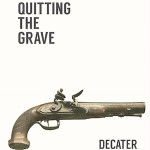 Check out Decater's novel, available now at Amazon. Plus, don't forget his other books: They Both Love Vonnegut, Ahab's Adventures in Wonderland, and Picasso Painted Dinosaurs.
Related Posts


About The Author

dancewithsunflowers
I prefer not to think of all the misery but of all the beauty that still remains. -Anne Frank